Back
RAG & Semantic Search

A Source-Grounded AI Workflow That Turns Scattered Public and Partner Data Into a Citable Community Needs Assessment

How Pfactorial Technologies built a proof-of-concept AI workflow that acquires, normalizes, and synthesizes public and partner data into a citation-backed, human-reviewed Community Needs Assessment for a Head Start delegate program operator.
August 21, 2026
Share
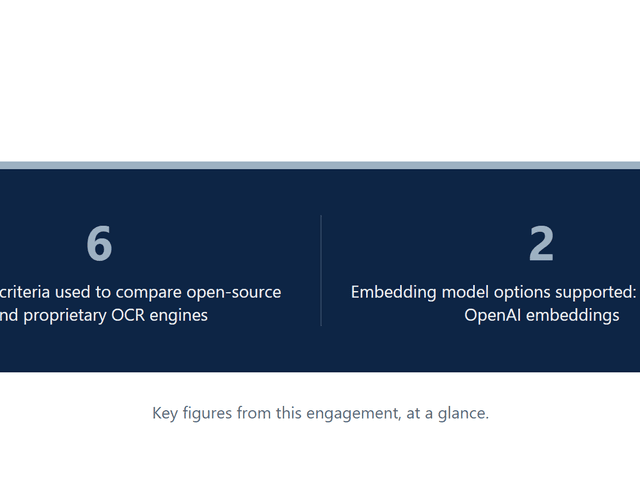
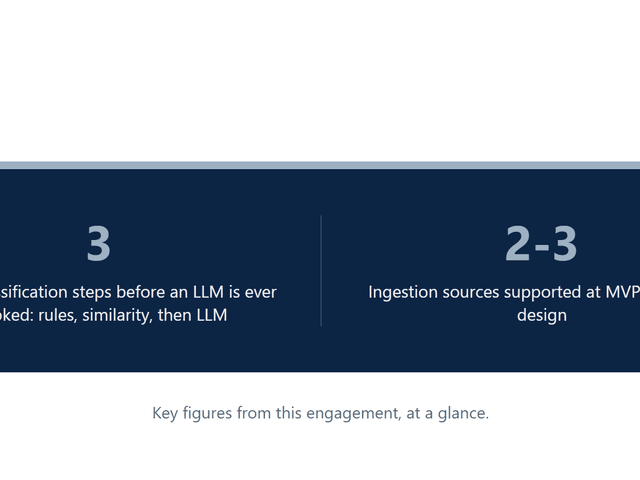
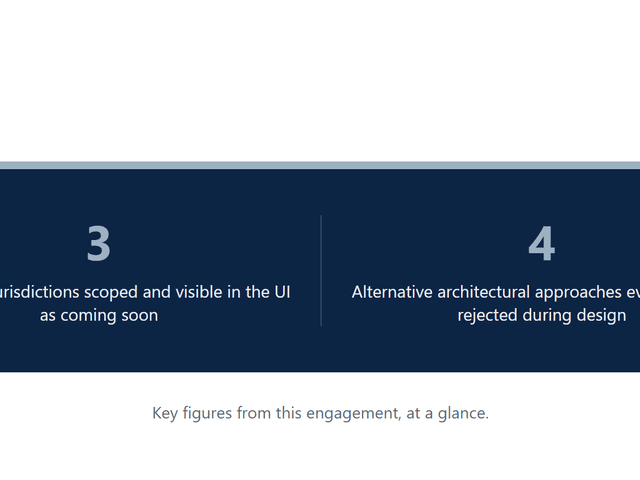
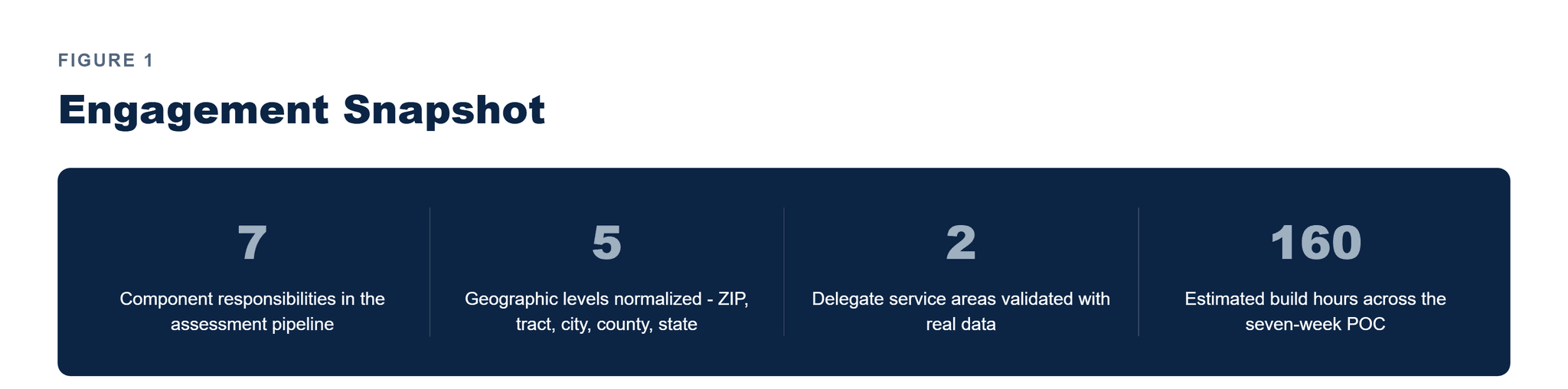
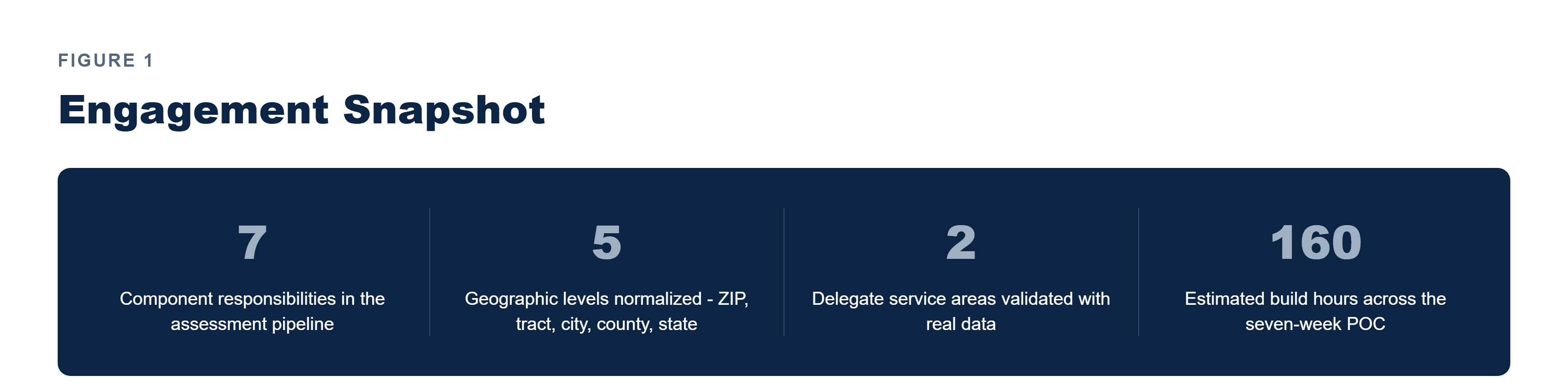
ENGAGEMENT SNAPSHOT

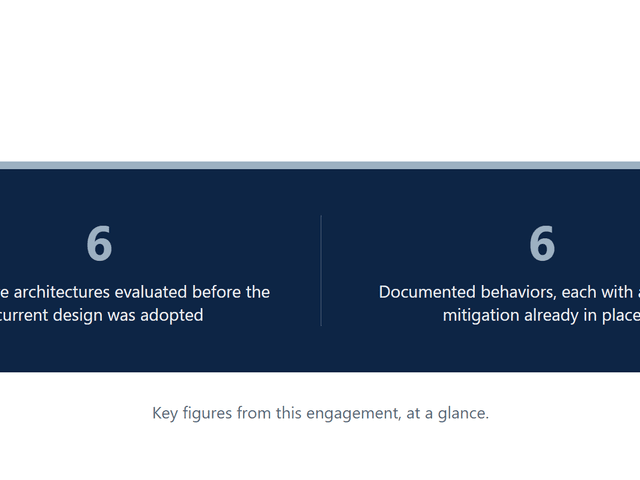
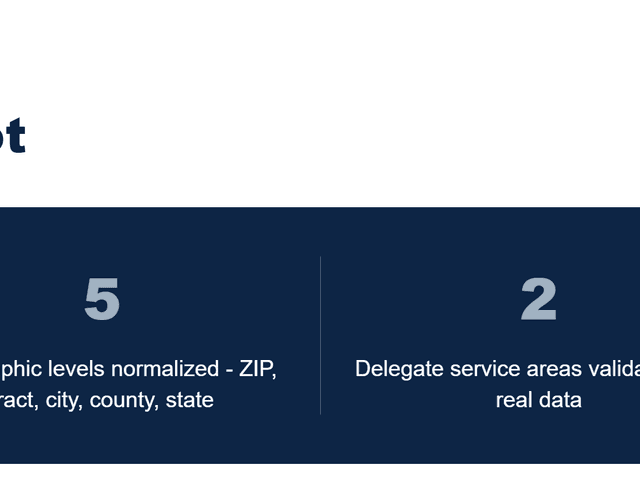
Pfactorial_Case_Study_AI_CNA image 1
Figure 1 - Key figures from this engagement, at a glance.
EXECUTIVE SUMMARY
Our client, a Head Start delegate program operator, needed a repeatable, evidence-based Community Needs Assessment that pulls public and community-level data, aligns it across geographies, and synthesizes it with the operator's own program data into a report aligned to CNA / HSPPS requirements.
A single large prompt trying to acquire, normalize, synthesize and narrate all at once could not have been trusted with findings that have to hold up under SME and regulatory scrutiny; the harder problem was making every synthesized claim traceable back to a named, dated source, and knowing when to say a data gap exists rather than filling it with a plausible-sounding narrative.
Pfactorial built a modular, retrieval-grounded pipeline - separate acquisition, normalization, RAG grounding, synthesis, narrative and citation layers, plus a human-review interface - validated end to end against real data from two of the operator's own service areas.
Why this engagement is representative This engagement demonstrates Pfactorial's ability to build evidence-based AI synthesis for a regulated reporting requirement, where every claim in the output has to survive a named-source check, not just read plausibly.
THE CHALLENGE
Building an AI-assisted CNA workflow meant solving problems that don't show up until a finding has to be defensible in front of subject-matter experts.

1. One oversized prompt can't responsibly acquire, normalize, synthesize and narrate at once

Accuracy requires separating retrieval-grounded synthesis from narrative generation, each with its own responsibility and its own failure mode.

2. Data arrives at five different geographic levels

Demographic, socioeconomic, education and early-childhood indicators have to be cleaned and aligned across ZIP code, census tract, city, county and state before they can be compared at all.

3. A finding without a traceable source can't be published

Every generated claim needs a citation back to a specific, dated document, or it has to be withheld from the narrative rather than presented as fact.

4. Conflicting or missing data has to be surfaced, not resolved silently

Two sources disagreeing, a stale dataset, or a gap in a required geography all need to be flagged for SME review rather than papered over.
The real brief Not "generate a CNA report from a prompt" but "acquire, normalize and synthesize real public and partner data into findings that trace back to a named, dated source - and say so directly when there isn't enough data, instead of filling the gap with a plausible-sounding narrative."
THE SOLUTION
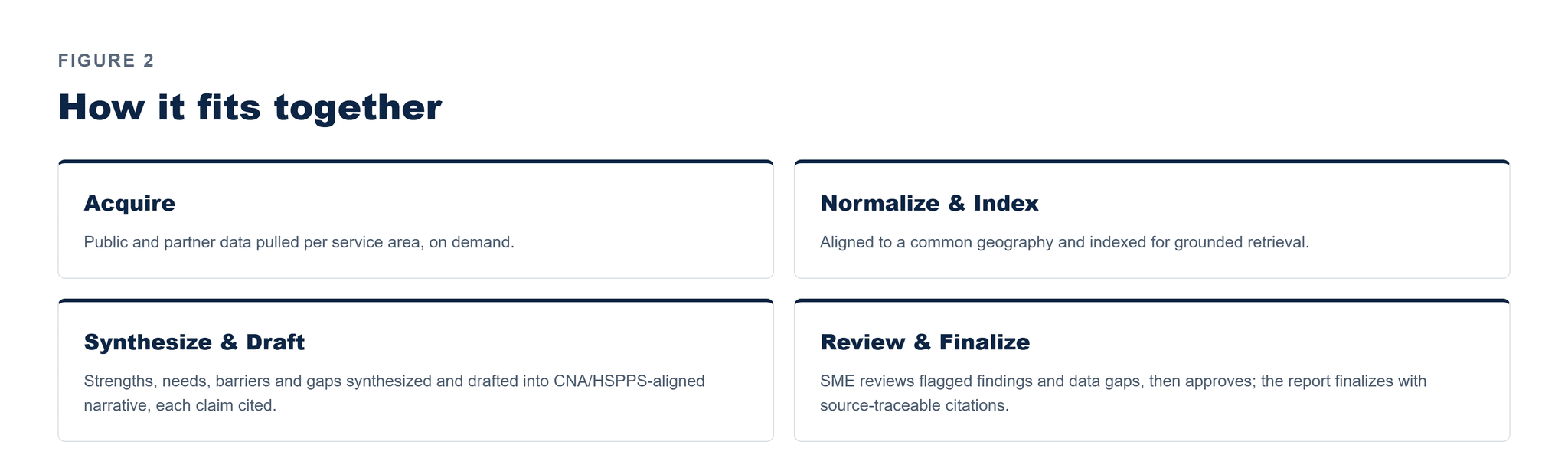
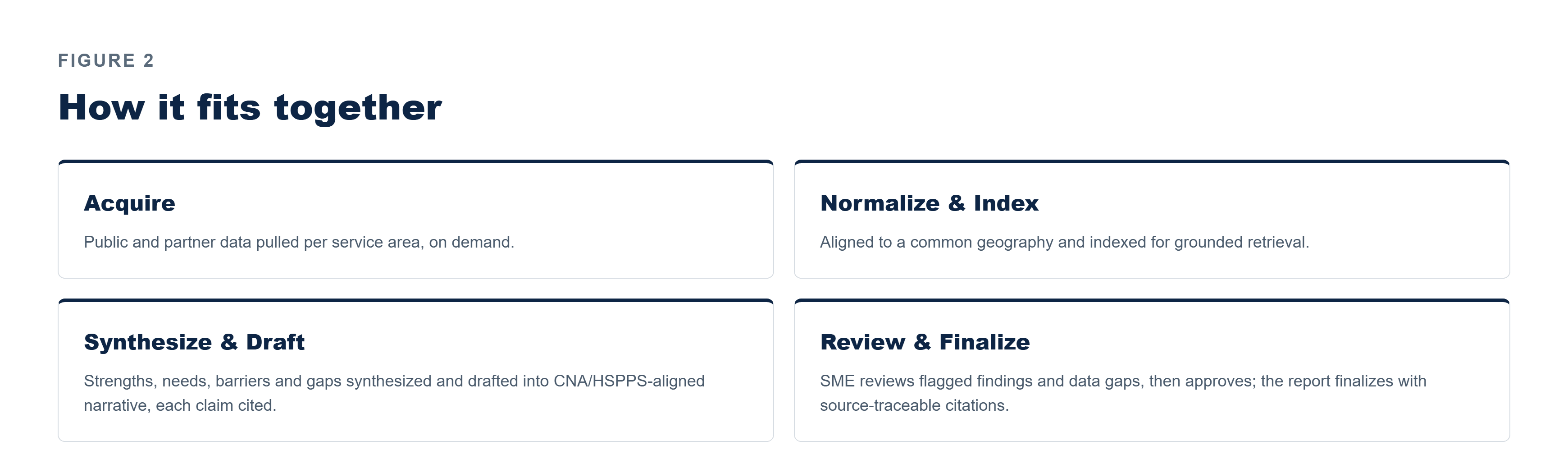
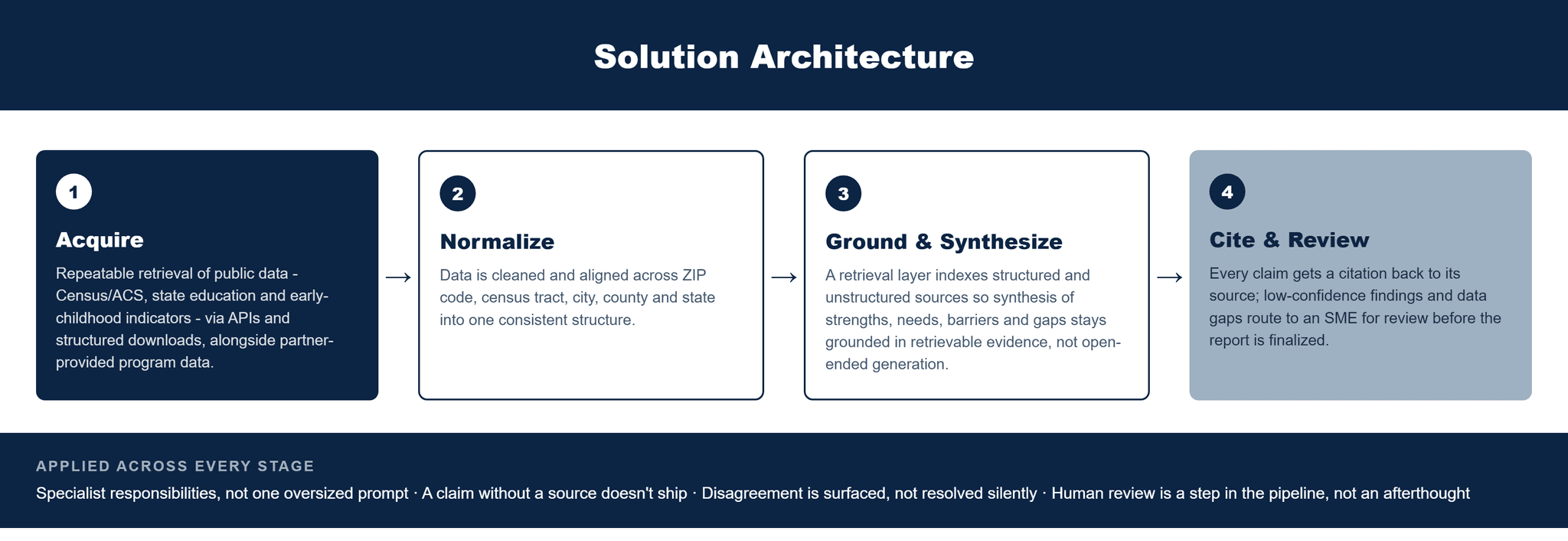
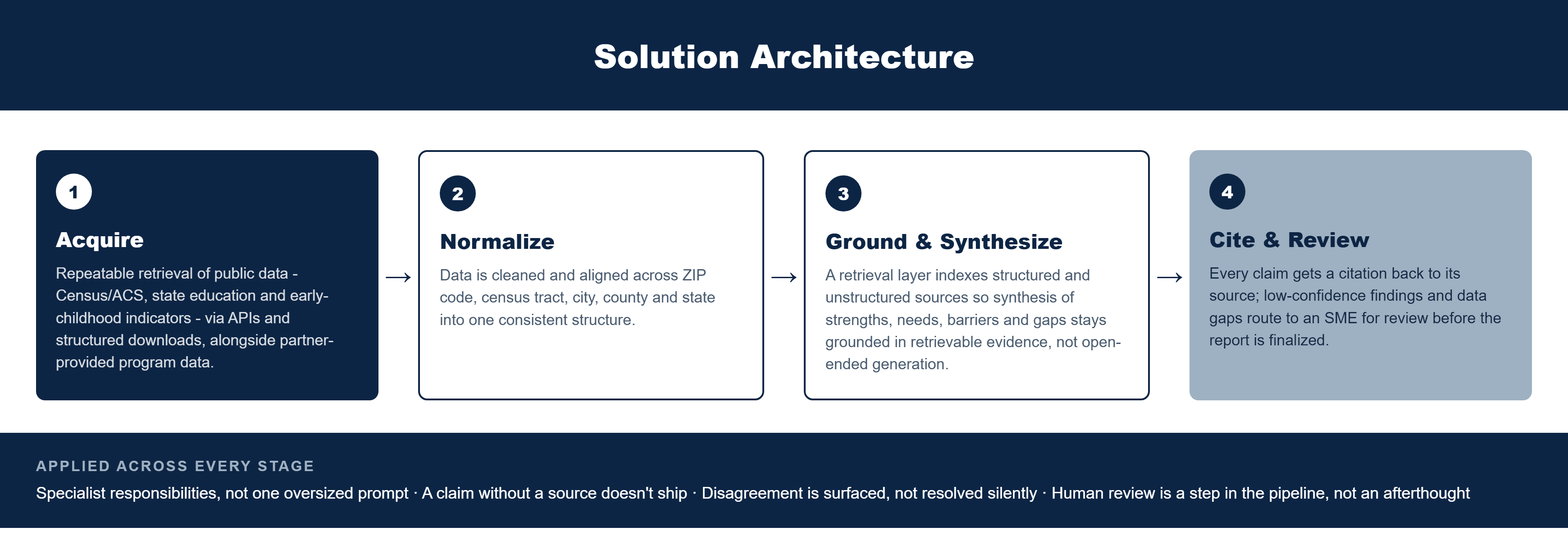
Pfactorial built the CNA workflow as seven cooperating responsibilities under one assessment pipeline, so accuracy doesn't depend on a single large prompt trying to do everything at once.
Pfactorial_Case_Study_AI_CNA image 2
Figure 1 - Every synthesized claim carries a citation back to a retrievable source; anything the pipeline can't ground routes to a human before the report is finalized.

Architectural principles

  • Specialist responsibilities, not one oversized prompt - Acquisition, normalization, grounding, synthesis, narrative and citation are each a distinct component, so accuracy doesn't hinge on a single model call doing everything.
  • A claim without a source doesn't ship - The workflow never presents a synthesized finding without a traceable citation, and never fills a data gap with an unsupported estimate.
  • Disagreement is surfaced, not resolved silently - When two sources disagree, or partner data conflicts with public data, both are shown side by side for SME reconciliation rather than auto-merged.
  • Human review is a step in the pipeline, not an afterthought - Low-confidence findings, data gaps and edge cases are flagged for SME review before any report is finalized, keeping a person in the loop on every close call.
CAPABILITIES DELIVERED
Each capability moves the workflow from scattered source data to a report an SME can trust and approve.
CAPABILITY
WHAT IT DOES
Public data retrieval & integration
Repeatable acquisition of demographic, socioeconomic, education and early-childhood data via APIs and structured downloads, refreshed on demand.
Multi-source normalization
Cleans and aligns data across source formats and geographic levels - ZIP code, census tract, city, county and state - into one consistent structure.
Community resource mapping
Identifies and organizes child care, preschool, home visiting and publicly funded pre-K resources against reliable public data.
Source-grounded synthesis
Combines structured data, unstructured materials and partner-provided context into evidence-based findings using retrieval-augmented grounding.
Narrative generation with citations
Produces CNA-aligned narrative findings with traceable citations back to the specific data source behind each claim.
Human-review safeguards
Flags low-confidence findings, data gaps and edge cases for SME review rather than presenting them as certain.
Pfactorial_Case_Study_AI_CNA image 3
Figure 2 - The same acquisition, normalization and synthesis pattern re-runs for a new service area, reporting cycle, or delegate without redesigning the workflow.
Design note The system deliberately withholds a claim it can't trace to a source rather than smoothing it into the narrative - the safe failure mode is a visible gap an SME has to address, not an unsupported sentence that reads as confident.
ENGINEERING FOR SCALE AND RELIABILITY
Five decisions kept the pipeline defensible against SME and regulatory scrutiny.

Retrieval-grounded synthesis instead of open-ended generation

The synthesis and narrative layers are prompted only against retrieved, source-grounded context, so a finding is never generated purely from model recall.

A geographic crosswalk layer, not per-source geography handling

Aligning ZIP code, census tract, city, county and state through one normalization layer means a new data source doesn't require its own geography-matching logic.

Structured metadata tagging every generated claim

Each claim carries a source document and retrieval-passage reference, which is what makes narrative findings checkable rather than just trusted.

A minimal review interface instead of a public-facing product

The interface is scoped to triggering a run and supporting SME review, matching a workflow that runs on demand rather than continuously at high volume.

Multi-provider LLM flexibility built in from the start

Synthesis and narrative generation are prompted against retrieved context behind a swappable model interface, so a vendor or cost change doesn't require rebuilding the pipeline.
DELIVERY APPROACH
The seven-week POC moved from discovery to a validated, human-reviewed workflow tested against two real service areas.
1. Discovery & solution architecture - reviewing HSPPS requirements, CNA examples and identified data sources with SMEs before any build work started.
2. Data & AI workflow development - building repeatable data acquisition, normalization, source-grounded synthesis, narrative generation and citation/traceability.
3. Testing, validation & refinement - testing against the delegate's two service areas, validating accuracy, traceability, completeness and narrative quality.
4. Documentation & knowledge transfer - finalizing the design document, technical and process documentation, a walkthrough session, and future-phase recommendations.
RESULTS AND IMPACT

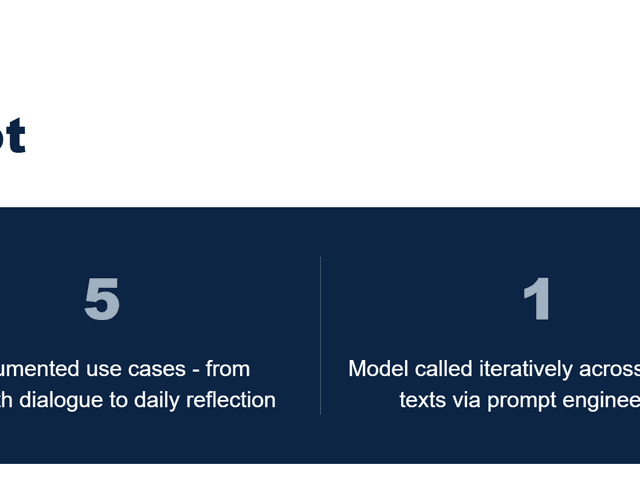
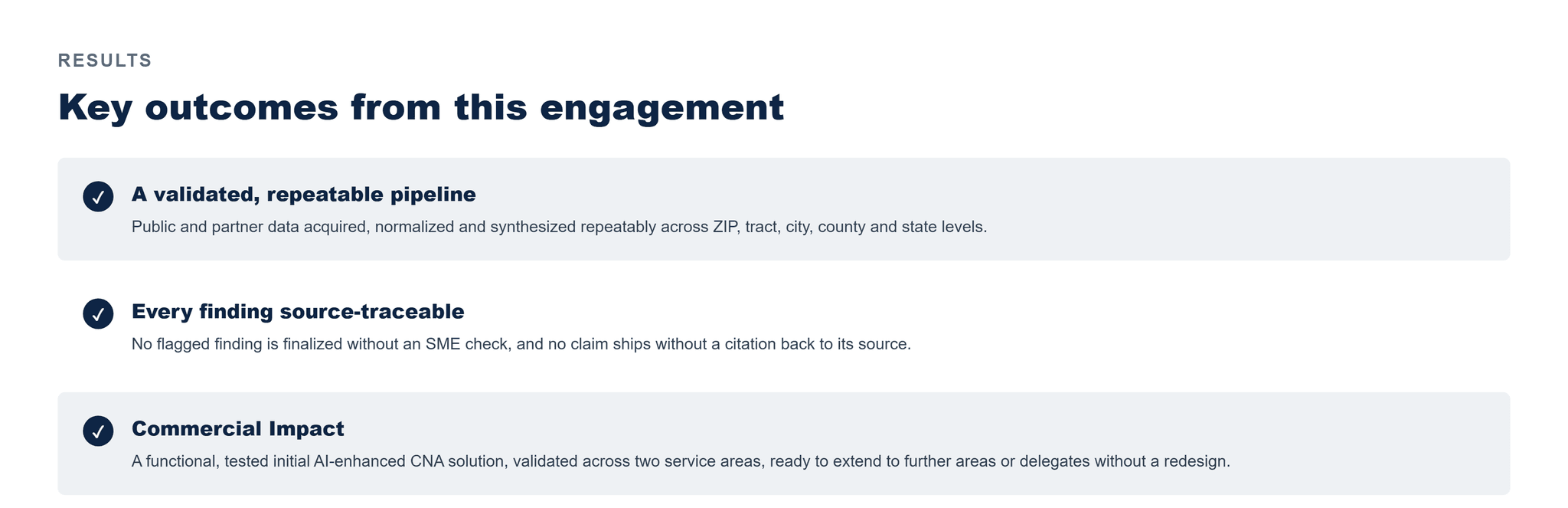
Pfactorial_Case_Study_AI_CNA image 4
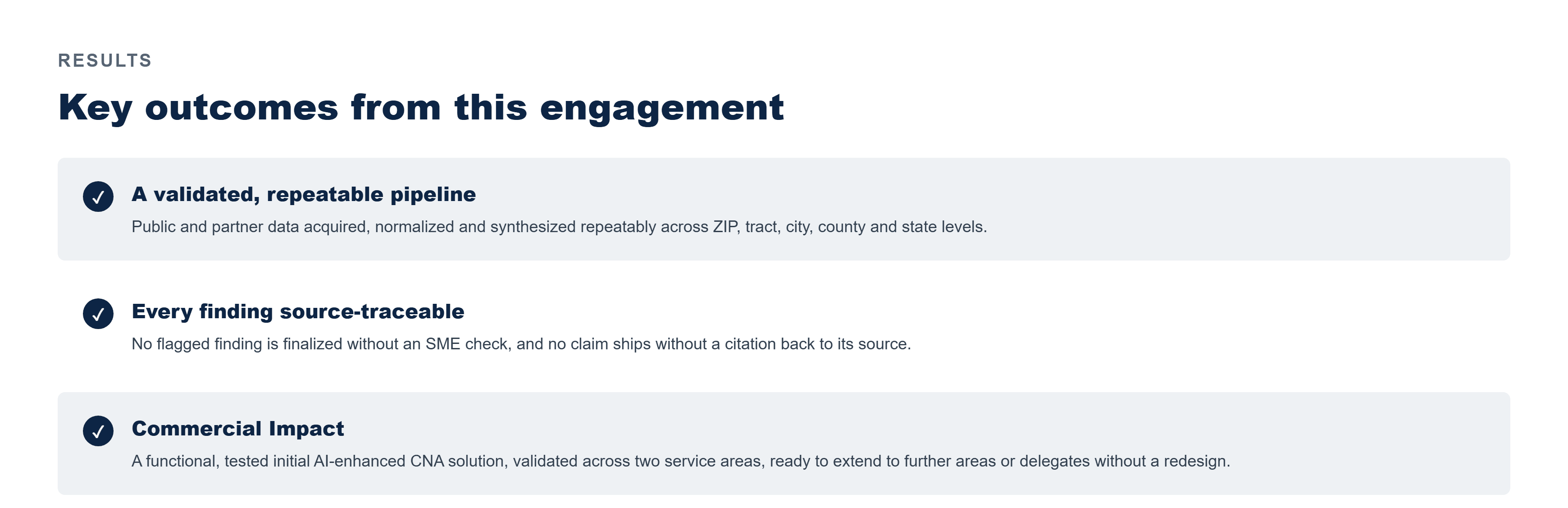
- Key outcomes from this engagement.
The POC delivered a functional, tested CNA workflow validated across two distinct service areas within the delegate program, with public and partner data acquired, normalized and synthesized into citation-backed narrative findings ready for SME review.
Because every claim traces back to a named, dated source and every low-confidence finding routes to a human before the report is finalized, the workflow is built to hold up under SME scrutiny rather than function only as a demonstration of what generative AI can produce.

What it enabled commercially

The operator now has a validated technical foundation that extends to additional service areas, delegates or reporting cycles as a matter of configuration rather than redesign, along with full documentation and design ownership handed over for independent maintenance.
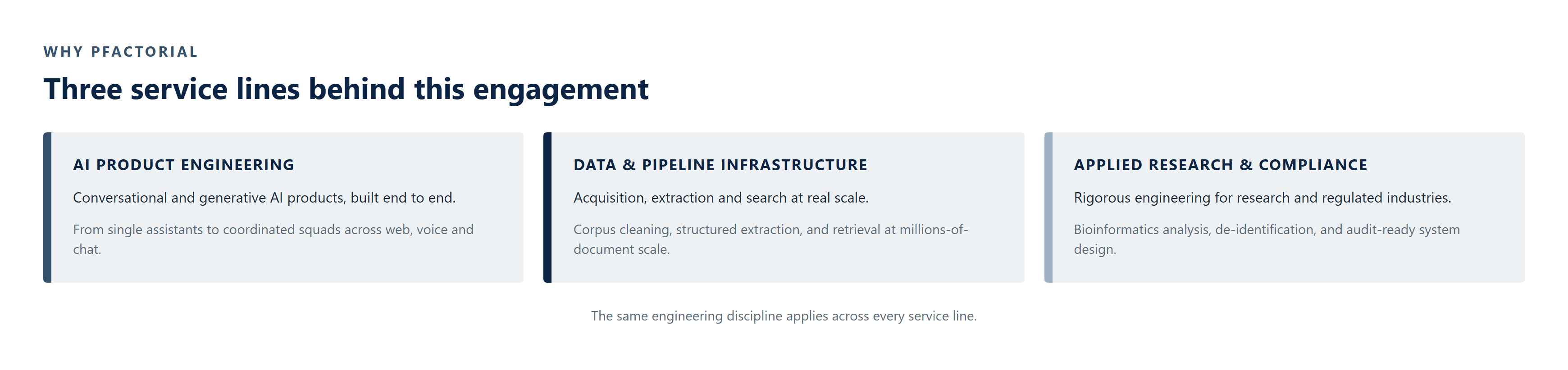
WHY PFACTORIAL
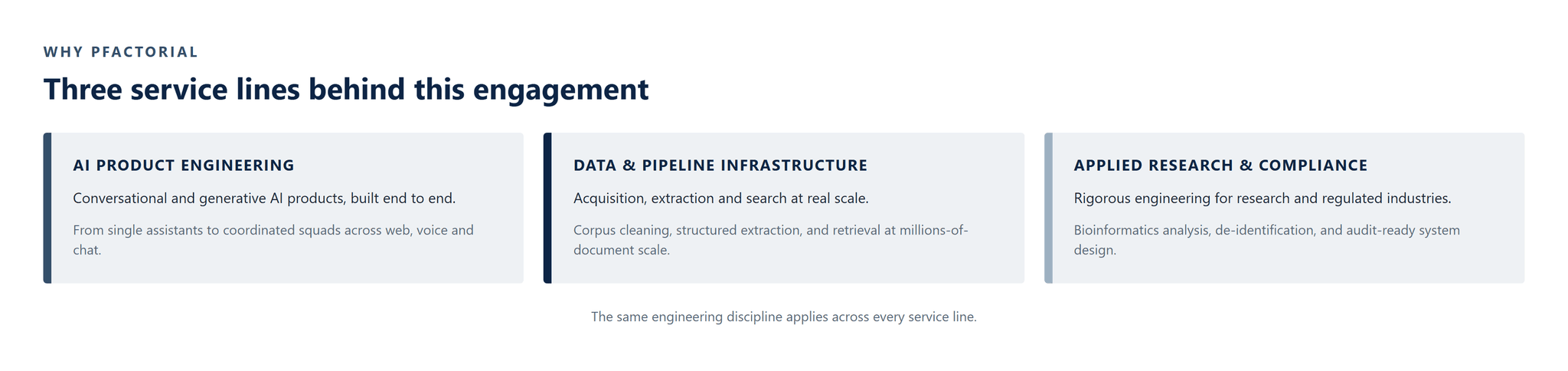
This engagement sits within Pfactorial's applied AI practice for regulated reporting: building retrieval-grounded synthesis pipelines where every claim has to survive a named-source check, with human review built into the pipeline rather than bolted on afterward.
Pfactorial_Case_Study_AI_CNA image 5
- Service lines this engagement draws on.
Engagement enquiries Pfactorial Technologies works with nonprofits and human-services operators that need evidence-based reporting built on real data, not a demo. If you're evaluating an AI-assisted needs-assessment or compliance-reporting workflow, we're happy to give you an honest read on scope and risk before anyone commits to anything. · pfactorial.ai
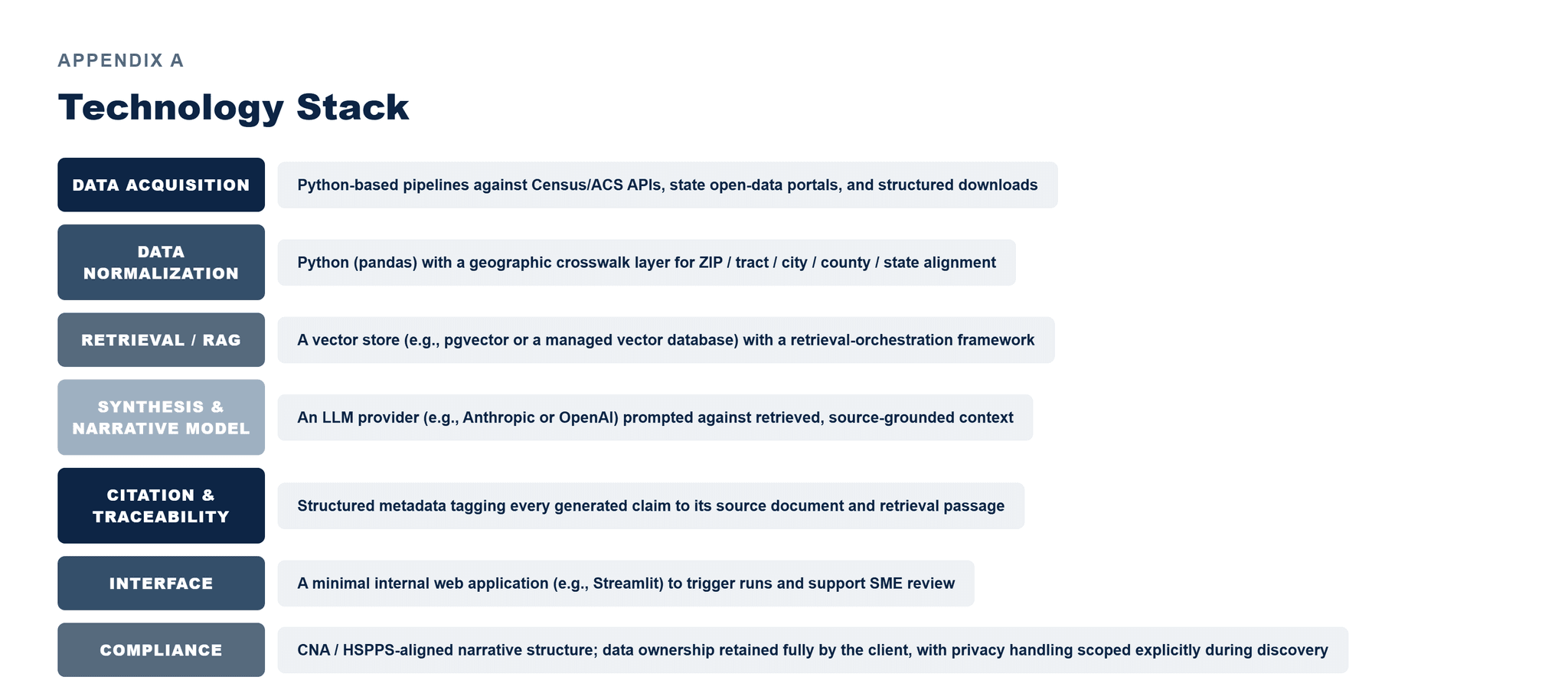
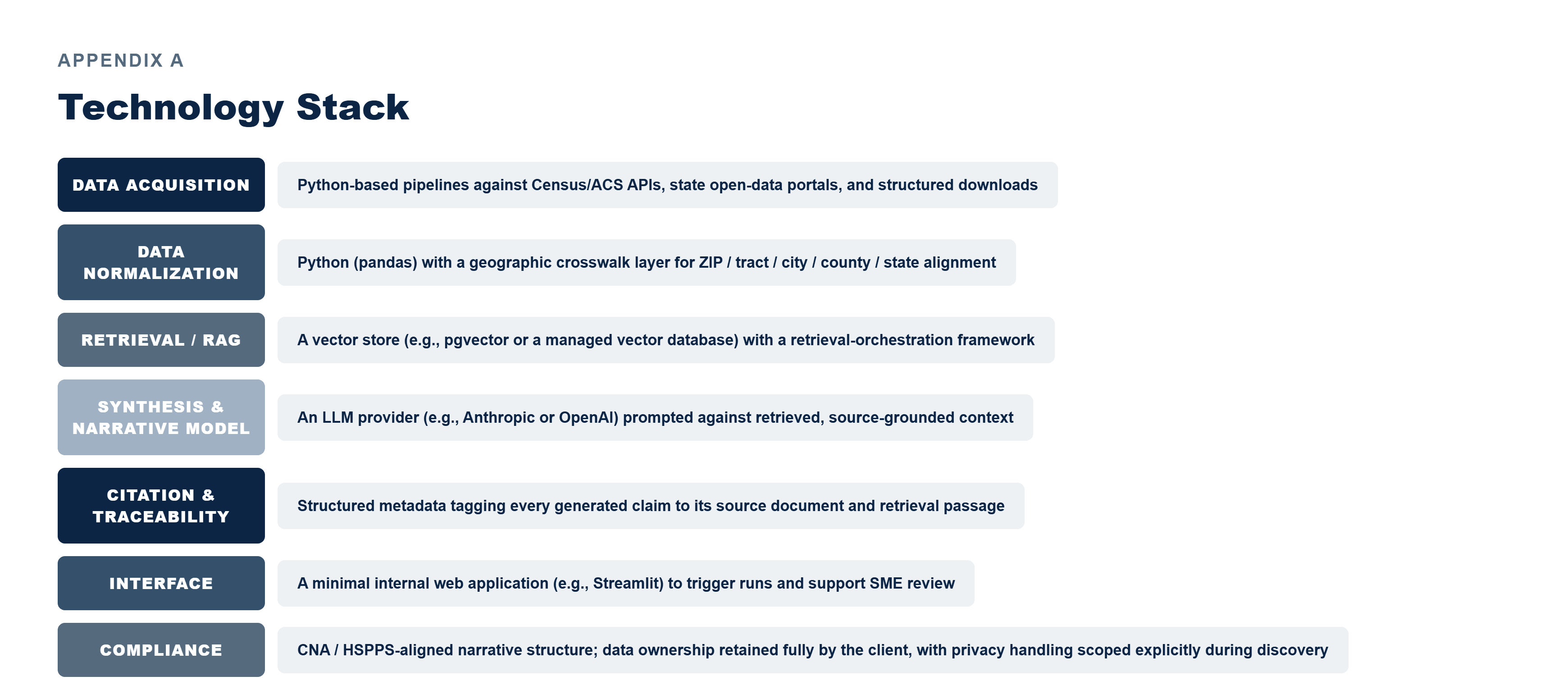
APPENDIX A - TECHNOLOGY STACK
The technology stack underpinning the system, grouped by the layer it serves.
Pfactorial_Case_Study_AI_CNA image 6

Result and Analysis

ENGAGEMENT SNAPSHOT

How Pfactorial Technologies built a proof-of-concept AI workflow that acquires, normalizes, and synthesizes public and partner data into a citation-backed, human-reviewed Community Needs Assessment for a Head Start delegate program operator.
Pfactorial_Case_Study_AI_CNA image 1
Pfactorial_Case_Study_AI_CNA image 2
Pfactorial_Case_Study_AI_CNA image 3
Pfactorial_Case_Study_AI_CNA image 4
Pfactorial_Case_Study_AI_CNA image 5
Pfactorial_Case_Study_AI_CNA image 6

CASE STUDIES

You might also like...


Pfactorial_Case_Study_Automotive_AI_Chatbot image 1
RAG & Semantic SearchAutomotive & Vehicle

A Botpress-Built AI Sales & Service Assistant That Qualifies Automotive Leads 24/7

Aug 21, 20267 min readRead
CS-016_Executive_Vista_Platform image 1
RAG & Semantic Search

A Layered Analytics Platform for CXO-Level Decision-Making

Aug 21, 20268 min readRead
Pfactorial_Case_Study_Unicite image 1

A Multi-Perspective AI Response Engine Grounded in Three Religious Texts

Aug 21, 20266 min readRead
Pfactorial_Case_Study_TalentGPT_Candidate_Search image 1
Recruiting & HR TechRAG & Semantic Search

A Natural-Language Candidate Search Platform That Replaces Boolean Query Building

Aug 21, 20267 min readRead
Pfactorial_Case_Study_SEC_SEDAR_Agreement_Search_Engine image 1
OCR & Document ExtractionRAG & Semantic SearchFinance & Payments

A Purpose-Built Search Engine for 1.6 Million SEC & SEDAR Agreements

Aug 21, 20267 min readRead
Pfactorial_Case_Study_AI_Search_Engine_Tax_Records image 1
Conversational AI & ChatbotsRAG & Semantic Search

A Retrieval-Augmented Chat Interface Over Structured Tax Records

Aug 21, 20267 min readRead
Pfactorial_Case_Study_AI_CNA image 1

A Source-Grounded AI Workflow That Turns Scattered Public and Partner Data Into a Citable Community Needs Assessment

Aug 21, 20267 min readRead
Pfactorial_Case_Study_TrialMatchAI_Agentic_Pipeline image 1
Multi-Agent & Agentic SystemsRAG & Semantic Search

An Agentic, Six-Agent Pipeline for Deterministic Clinical Trial Eligibility Matching

Aug 21, 20267 min readRead
CS-009_OCR_RAG_Chatbot_System image 1
Conversational AI & ChatbotsRAG & Semantic SearchEnterprise Ops Platforms

An OCR and RAG Platform for Conversational Document Intelligence

Aug 21, 20268 min readRead
CS-001_Fintech_Financial_Context_Engine image 1
RAG & Semantic SearchFinance & Payments

Architecting an AI-Native Financial Context Engine for Creators

Aug 21, 20269 min readRead
case-study-4
Machine LearningOCR & Document ExtractionNatural Language Processing+4

Automating SEC and SEDAR Agreement Processing: A Machine Learning Approach

May 18, 202611 min readRead
CS-011_ClauseGuard image 1

Clause-Level Contract Risk Analysis, Inside Google Docs

Aug 21, 20268 min readRead